
Where Kalawao County Recent Arrests Surface
Kalawao runs on an unusual structure. It has no county police department. It has no detention center or public booking portal either. Under Hawaii Revised Statutes chapter 326, the state Department of Health holds jurisdiction and control. The health director appoints the county sheriff. Deputized officers, National Park Service rangers at Kalaupapa National Historical Park, and Maui County mutual-aid agencies can all take part in an incident. Whoever made the arrest controls the record. The county publishes no same-day feed. There is no multi-day blotter, jail roster, mugshot gallery, booking app, or standing most-wanted page. That silence does not mean nobody was arrested. Match the event location, arresting agency, and custody stage to the right doorway among DOH, NPS, Maui Police, DCR, or the courts.
| Window | Status | Next route |
|---|---|---|
| Same day | No verified county feed | Daily Arrest Report |
| Several days | No verified blotter or archive | Weekly Arrest Log |
| State custody | May appear after DCR intake | VINELink Inmate Check |
| Filed case | Public details and available documents | eCourt Kōkua |
Who Handles an Arrest in Kalawao?
The official DOH Kalaupapa responsibility guide shows why a single county-search assumption fails here.
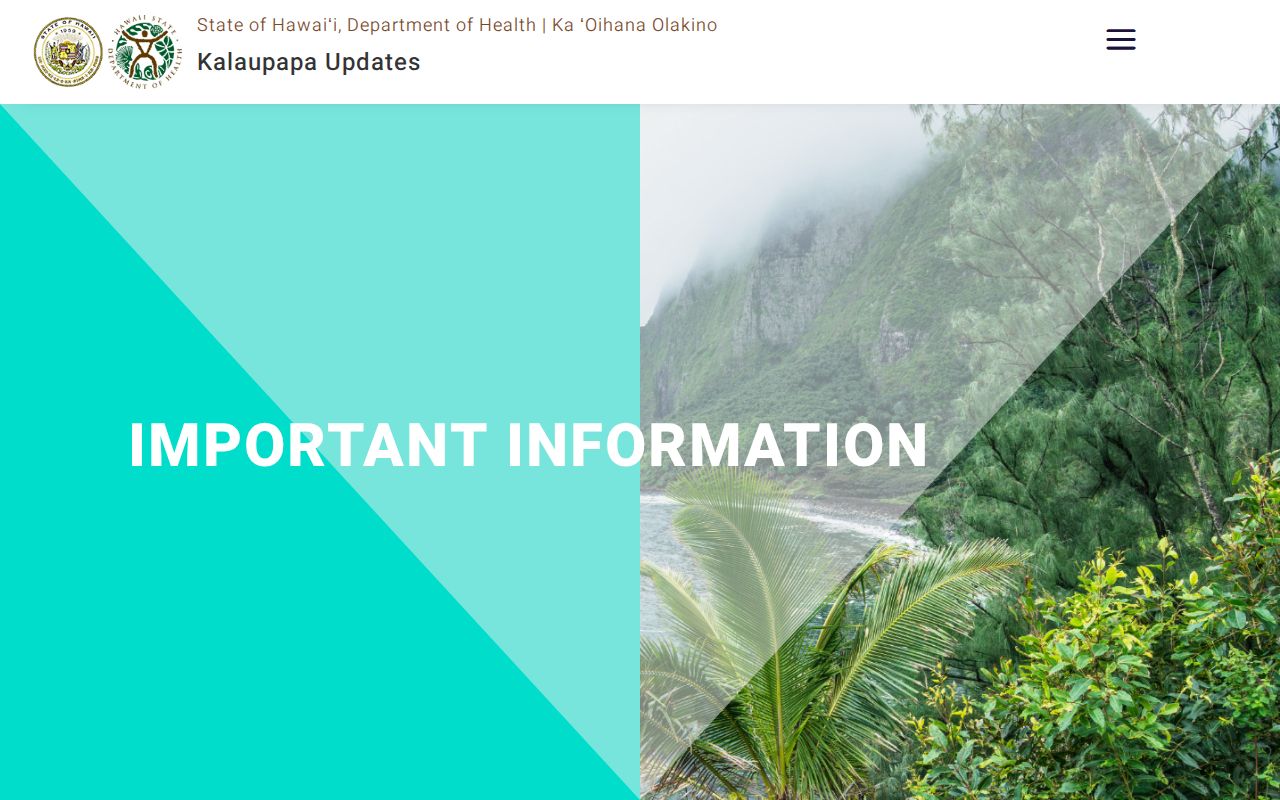
State and federal pages describe the separate DOH, NPS, and Maui mutual-aid roles without naming anyone arrested.
| Custodian | When it applies | Access |
|---|---|---|
| Kalawao sheriff / DOH | Sheriff or deputized-officer incident | DOH UIPA request |
| National Park Service | Ranger enforcement in the park | NPS FOIA |
| Maui Police | Mutual aid, receiving, or report ownership | MPD Records |
| Hawaii DCR | State jail intake or custody | SAVIN and DCR records |
| Judiciary | Complaint, hearing, disposition | eCourt or clerk |
The 2024 state directory lists Administrative Sheriff Ken Seamon at 808-567-6924 and 808-567-6928. The DOH Hansen's Disease Branch can be reached at 808-733-9831. Treat these as routing numbers rather than booking desks, since immediate disclosure is never guaranteed.
Kalawao County Arrest Roster Reality
Kalawao County has no jail of its own. There is no searchable county inmate roster either. DCR runs Hawaii's four state jails, including Maui Community Correctional Center. MCCC is a state facility, not a "Kalawao jail." Someone recently arrested might sit briefly in a police cellblock, get released, pass through court, or enter DCR custody. Each stage changes what a search returns. The official DCR Corrections Division page maps the state jail system and lists no Kalawao facility.
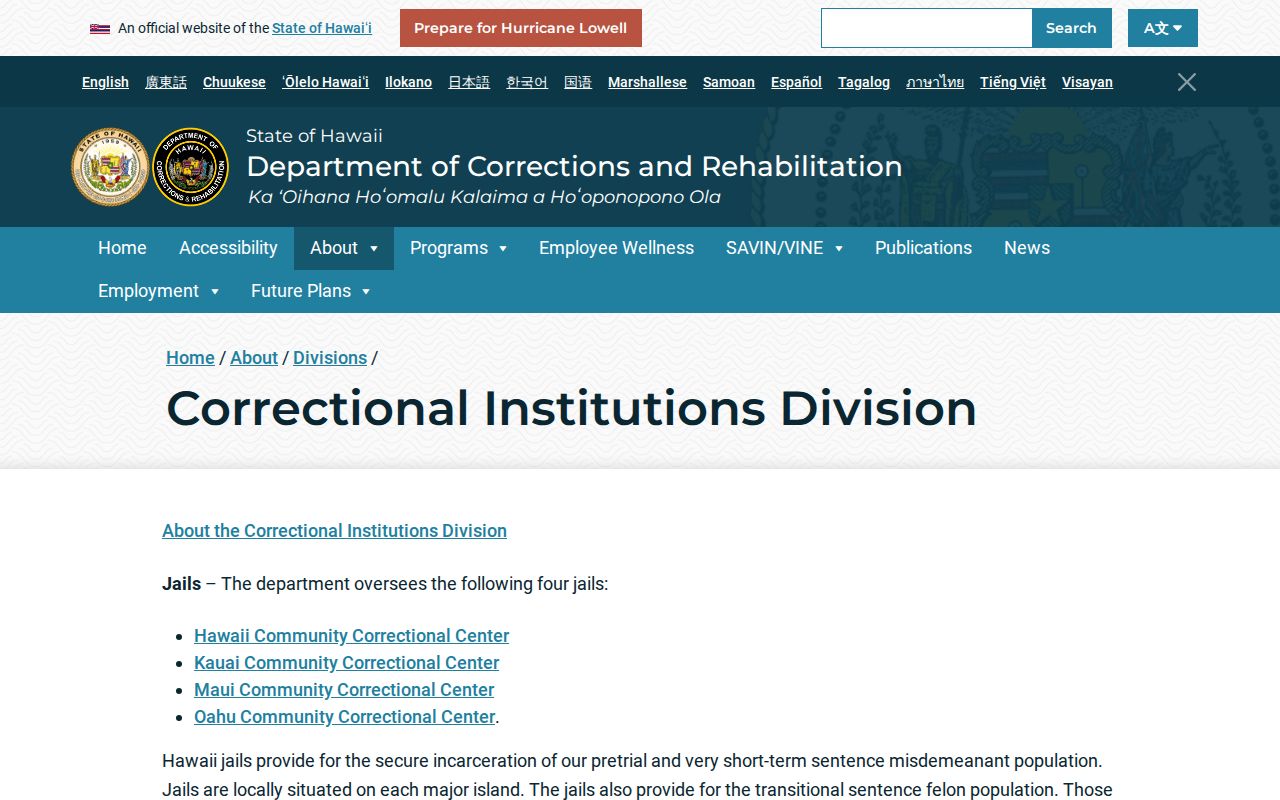
This source keeps a state facility from being mislabeled as a local roster.
How to check custody
- Confirm whether DOH, NPS, MPD, or another agency handled the event.
- Ask that agency for an incident or booking number.
- If state intake is likely, search SAVIN by name and any offender or case number.
- Record the result date and time because custody changes.
- Use eCourt for filed charges and disposition.
| Search field | Purpose |
|---|---|
| Full recorded name | Separates similar identities |
| Incident, offender, or case number | Connects agency and court files |
| Date and location | Identifies the likely custodian |
| Facility and status | Distinguishes custody, transfer, and release |
The sheriff's office offers no booking app. SAVIN is a statewide custody notification service rather than a substitute, and it only becomes relevant after someone enters covered DCR intake.
Where Kalawao Arrest Information Is Published
| Channel | Photos? | Official? | Access |
|---|---|---|---|
| DOH sheriff record | Request, subject to review | Yes | Written UIPA request |
| NPS ranger file | Not guaranteed | Yes | NPS FOIA |
| MPD report or log | Not routinely posted | Yes | MPD Records |
| SAVIN / VINELink | Not guaranteed | Yes | Custody search |
| eCourt | Usually no | Yes | Case search |
| Local news | Sometimes | No | Dated, selective stories |
| Commercial indexes | Unverified | No | Lead only |
The Maui News, Molokai Dispatch, and Maui Now cover Kalawao arrests, though only in context. None provides a full log. Big mugshot domains simply leave the county out. Open Public Records, PublicRecordCenter, Hawaii Official Records, and a private released-inmates page are index-style and unaffiliated, so their entries on recent arrests can be stale, thin, or missing entirely. Confirm anything you find with the agency or the court.
Maui Now covered MPD release practices on September 4, 2026. It says an arrest log may be reviewed at the Wailuku station receiving desk at any hour. That helps only when MPD holds the record. It is not an online Kalawao roster. Not every Kalawao arrest necessarily reaches that desk. The report also notes that MPD generally keeps names, mugshots, and identifying details out of routine releases unless public safety or crime prevention justifies disclosure.
Search news by place, agency, and date. Terms like “Kalaupapa,” “Kalawao sheriff,” “Molokai Police,” and “Kalaupapa ranger” can surface different records. Note the article date, the event date, and the arresting agency named. Track any later court update too. A photo in a story may be plain editorial photography rather than a booking image, and one story is not a full publication schedule for Kalawao recent arrests.
Kalaupapa, Kalawao, and Waikolu Searches
Kalawao County contains zero incorporated cities or towns. Kalaupapa, Kalawao, and Waikolu are simply places named in HRS §326-34. They are not municipalities. There is no local police department or arrest feed for any of them. No city arrest links belong here. Paired with an agency and date, the names still help. Kaunakakai sits nearby on Molokai but belongs to Maui County, not Kalawao. Its police station and district court can still matter for routing.
What a Kalawao Arrest Record May Show
No Kalawao roster format is published for the public. So think of these as items to request rather than fields an online search will return. The name as recorded belongs on the list. So does any incident, arrest, booking, or case number. Add the date, time, and place of the arrest. Include the agency that made it and the charges as written down. Also note any bail or release notation, where the person was transferred, an identification photo if one exists, and the court the case was routed to. When a field comes back empty, that gap reflects the record itself. It is not proof the arrest never happened.
Context matters with every field. A charge label captures what an officer or prosecutor wrote at one stage. It can change later. Judges can raise or lower bail. A release entry will not tell you whether bail was posted, conditions were imposed, a sentence ended, or custody simply moved elsewhere. That is, unless the record spells it out. A facility name marks where the person was held at that moment. It does not say where they are now. Match names against record numbers and dates before assuming two entries describe the same individual.
The strongest request often ties three records together instead of chasing one master report. The arresting agency holds the event narrative and the core arrest fields. A custody agency keeps intake, housing, transfer, and release facts. The Judiciary carries the filed charges, hearings, orders, and final disposition. Each source updates on its own schedule. Save copies and access dates. That way a later reader can trace which fact came from which stage.
Kalawao County Arrest Mugshots and Photos
Kalawao County publishes no routine mugshot gallery, and DCR offers no photo locator. A booking image can still sit in an agency file without ever being posted online. For how the state weighs these requests, the official OIP mugshot opinion walks through the public-record analysis.
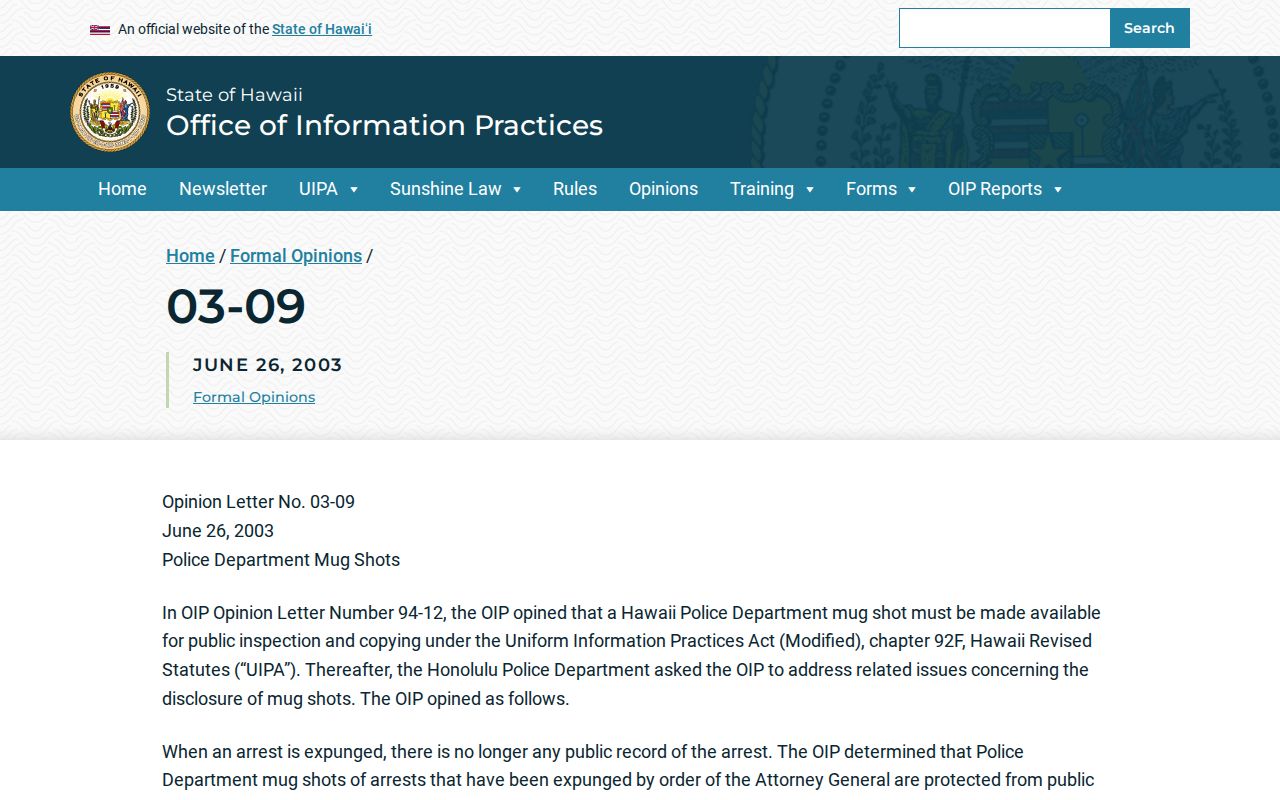
That opinion backs targeted analysis. It does not back blanket republication of any gallery. Access can also turn on active investigations, juvenile status, privacy, sealing, or expungement. Route a photo request to its likely custodian: DOH, MPD, DCR, or NPS. Specify whether you want a booking image, an identification image, or another photo. No paid-removal service is endorsed here.
Request a Kalawao County Arrest Record
When the Kalawao sheriff created the record, the official DOH UIPA instructions are the primary route.
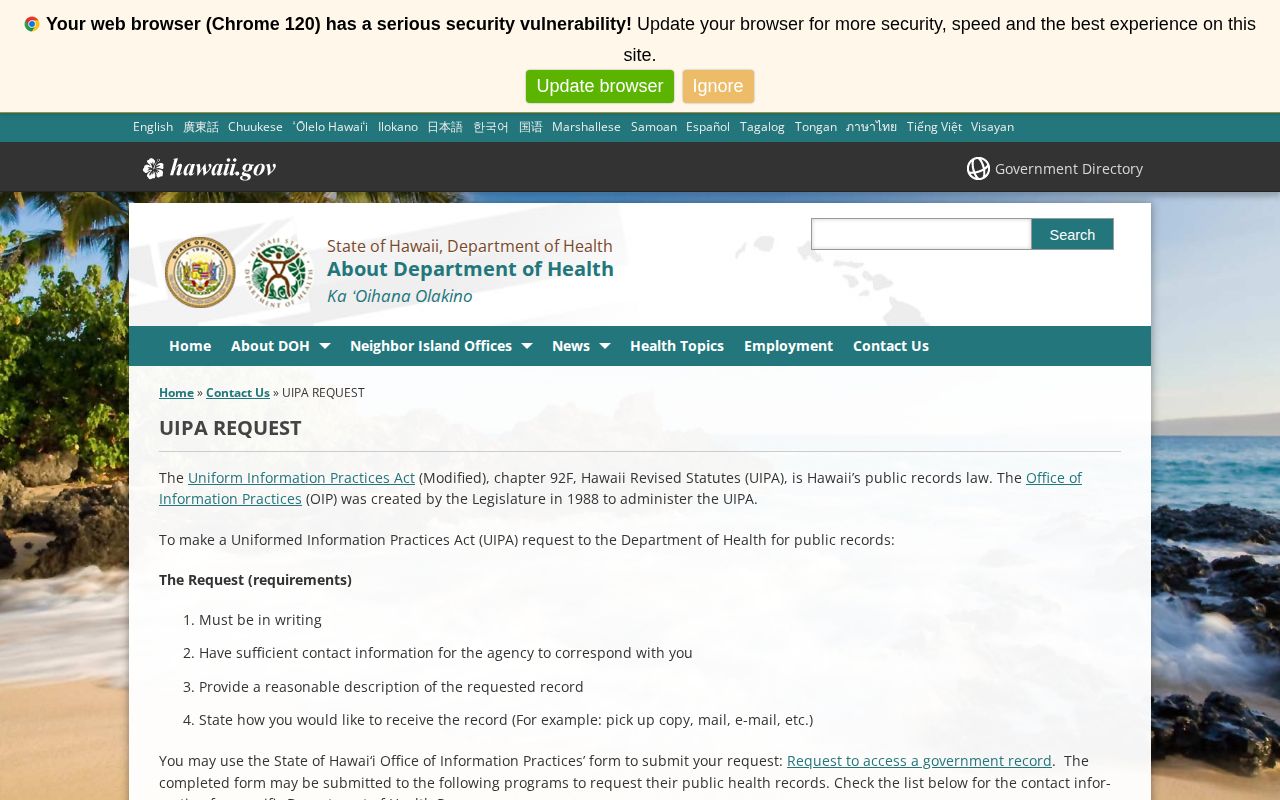
This is the practical fallback where no county roster supplies the event record.
- Name “Kalawao County Sheriff / Kalaupapa,” a narrow date range, location, and known number.
- List incident, arrest, intake, charges, transfer, release, and photo records separately.
- Give contact information and preferred delivery method.
- Ask for segregable nonexempt portions and the legal basis for withholding.
- Request a fee estimate and applicable retention schedule.
To reach DOH by mail, use 1250 Punchbowl Street, Room 210, Honolulu, HI 96813. OIP materials describe an ordinary 10-business-day response, with a possible 20-business-day extension for extenuating circumstances. Search, review, segregation, copying, and delivery fees can all apply. No free image or fixed completion time is promised.
MPD-owned reports go through its portal. You can also use its Records Section at 55 Mahalani Street, Wailuku, HI 96793, 808-244-6355. MPD states most reports arrive within 10 business days under UIPA. DCR intake records are requested directly from DCR. For a park incident, file through NPS FOIA. Name the park, the date, and the exact record you want.
Sending the request to the right custodian saves real time. MPD can hold a police report while a later DCR intake photo sits elsewhere. DCR keeps custody and transfer details without owning the original arrest narrative. NPS may apply federal privacy or law-enforcement exemptions to a ranger file. A court clerk can hand over a filed complaint. But the clerk will not treat an arrest record as a court-document category. Your first recipient may not be the custodian. If so, ask that office to identify or refer the proper one where permitted.
Define a period instead of requesting every arrest ever made in the county. Include alternate spellings only when they genuinely matter. Ask whether the responsive material is active, stored at a records center, or governed by a retention schedule. If nothing turns up, keep the office's exact wording. No responsive record located does not rule out an arrest. Another agency or jurisdiction may hold it.
What Kalawao Arrest Research Can Cost
Access is neither free nor instant across the board. UIPA work can carry search, review, segregation, copying, or delivery costs. eCourt lists its PDFs at $3 per document or 10 cents per page, whichever is greater. Some Second Circuit instructions mention a $5 name search without a case number, though that rule should not be mechanically applied to a First Circuit Kalawao matter. HCJDC lists a $25 in-person conviction-history printout, and eCrim lists a $12 online report. Neither works as a same-day booking feed. No Kalawao-specific photo fee is published. Payment cannot make an exempt record public.
Which Court Handles a Kalawao Arrest?
Official materials place the District of Kalawao in the First Circuit. Ordinary Molokai falls under the Second Circuit. The Molokai District Court in Kaunakakai is a Second Circuit court. Proximity alone will not tell you which clerk holds a case.
The Judiciary court-locations guide supplies the routing context.
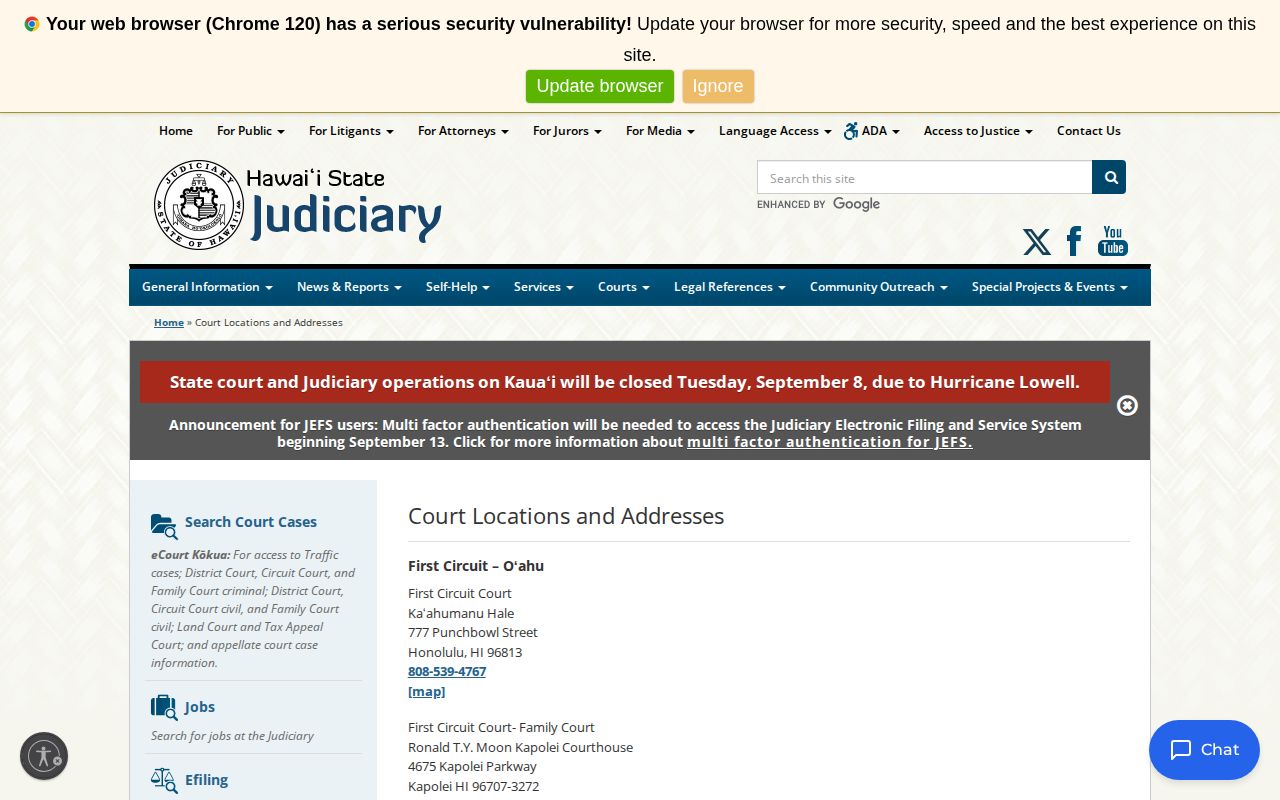
Which circuit owns a Kalawao arrest? Check eCourt or the clerk first. Guessing that every Molokai case follows one path leads to dead ends. Each source answers only its own question. A court file can show a complaint, a hearing, and the outcome. Yet it may hold no booking photo. A police report may exist with no case behind it. And an arrest record can survive in one system after expungement clears another. Match the record to what you actually need.
When you ask a clerk for a document, be exact. Give the defendant's name, the case number if you have it, the rough filing date, the court, and the document itself. Requesting a complaint, a judgment, or a hearing record works far better. It beats asking for "the arrest record." One caution: eCourt is not a full historical archive. Judiciary guidance notes search limits for older traffic cases before November 1995. It also limits district criminal cases before August 2012. For general system questions, the Judiciary public-information line at 808-539-4909 can help. It is not the clerk for any single case, though.
Hawaii Arrest Law and Online Publication
Hawaii's UIPA, found in HRS chapter 92F, leans toward open government records. Privacy, investigative, and confidentiality carve-outs exist too. Public access and routine online posting are two different things. An agency may decline to publish daily names or photos. It can still release them to a focused request. A custodian must weigh prosecution status, juvenile status, sealing, and expungement. The custodian also weighs whether parts of a record can be split out. Note that MPD's habit of trimming identifiers from routine releases is not Kalawao policy. The lesson is practical. A press release and a records request can return different information on the same arrest.
Money and redaction are separate fights. Offering to pay does not beat an exemption. Getting a fee estimate does not prove anything is being withheld, either. Ask for the estimate before spending much, and request the statutory reason behind any redacted material. Part of a document may be protected. Ask whether the rest can be released after segregation.
Timing shapes every source. An agency log may precede the full investigative report. A court complaint often lands after the arrest date. A SAVIN result may not surface until DCR intake, then shift after a transfer or release. A news story can run late and never note the final outcome. Always pin a date and time to any custody claim. Then let the court result finish the story.
Correcting or Removing an Arrest Record
A record can be public at one stage and restricted later. Fix agency errors with the custodian and keep the report number. News mistakes go to the newsroom with official proof attached. For an eligible nonconviction record, start with HCJDC expungement guidance. HCJDC quotes roughly 120 days, with no expedited track. Orders since July 1, 2025 go to the Judiciary under Act 003. Older orders may need separate court contact. Court files can stay open even after the repository and the arresting agency clear theirs.
Hawaii has no broad ban on paid removal services. Still, never pay anyone who promises universal deletion. Correct the source first, then request a search-engine refresh. Removing a search result does not amend the original record or every copy of it.
Kalawao Arrest Warrants and Wanted Notices
Kalawao County publishes no official warrant portal. It posts no most-wanted list. A warrant, a probable-cause arrest, and a bench warrant are different things. A stale article never proves active status. Official DCR guidance sends active-warrant questions to the Sheriff Division Warrants Section at 808-587-3632. For your own status, use eCourt. Or ask the correct clerk or counsel.
Why Kalawao Jurisdiction Dates Matter
Kalawao's governance sits in transition under 2026 legislation tied to the last patient resident. It is not a completed merger. It cannot be backdated into older records. DOH continues to describe the special county. Its materials cover the appointed sheriff, the NPS role, and Maui mutual aid. Anyone searching should record the incident date and which agency held records on that date.
HRS §326-37 gives the sheriff real teeth. The statute directs the office to preserve the peace and make arrests. It must also bring a person before a district judge. Prosecution falls to the office when able. That authority defines the job but creates no public booking website. HRS §326-38 separately covers police officers appointed with DOH authorization. Use the statutes to map authority. Use the report, custody record, and docket to learn what actually happened in one matter.
A future transfer of responsibility could change later contacts and request addresses. It will not automatically move every historical file. Nor does it change the authority that applied when an older event occurred. Preserve the source version and access date. Then ask the successor agency where the legacy records now live.
After Arrest: State and Federal Custody
Custody after a Kalawao arrest depends on which system holds the person. SAVIN tracks eligible state custody and parole status for the Department of Corrections and Rehabilitation. A missing result has several explanations. Intake may still be unfinished. The person may have been released from a police cellblock. Or the case may sit outside DCR entirely. The VINELink Inmate Check walks through status readings and alert setup. Treat notifications as updates, not verdicts. The federal side works differently. BOP covers federal sentences and holds, and it offers no Kalawao booking gallery. Someone arrested by National Park Service officers might start out with the U.S. Marshals or in a federal courtroom instead. ICE runs a separate locator for qualifying immigration detention. It demands exact identifying details to return anything.
The main state facility, MCCC, sits at 600 Waiale Drive in Wailuku. DCR describes its population as pretrial detainees, sentenced people, reintegration participants, and parole violators. Not every person arrested in Kalawao County ends up there. Call the jail only when a source points to DCR custody. Visitation details never confirm anyone's legal status.
Two federal tools deserve close attention. The BOP locator reaches back to about 1982. It lists a register number, the facility location, and a projected release date. Older federal files may live in the National Archives. ICE needs an exact A-number plus country of birth. Or it needs a full name, birth country, and birth date. Those identifiers are sensitive. Do not republish them. Never guess immigration status from a name, language, or birthplace. Neither tool settles what happened to a local charge.
Maui Police Department Molokai Station Location and Directions
Public Record Search
Sponsored Results